
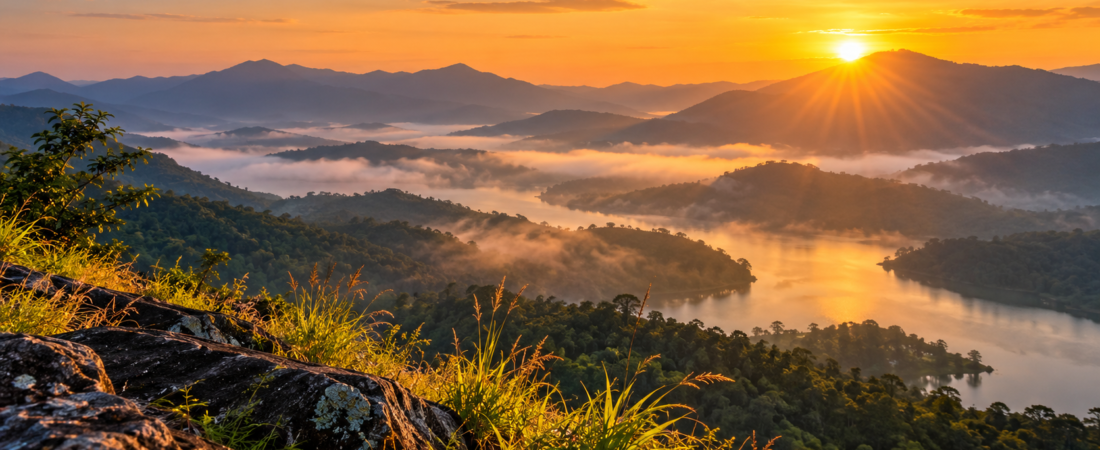
Why Early Mornings Are the Best Time to Take Scenic Photos
There is something special about stepping out with a camera before the world has fully woken up.
The roads are quieter. The air feels fresher. The light is softer. And the landscape often looks completely different from what you would see later in the day.
For scenic photography, early morning is one of my favorite times to pick up my camera. It is not just about getting beautiful light. It is about capturing a landscape before the usual rush of the day changes its character.
Here are some of the reasons I believe early mornings are one of the best times for scenic photography.
1. The light is soft and beautiful
One of the biggest advantages of photographing early in the morning is the quality of natural light.
When the sun is still low on the horizon, the light is softer and warmer than the harsh light you often get around midday. Mountains, trees, buildings, beaches, and other landscape elements can have a much more pleasing appearance.
This softer light also helps create depth without producing extremely harsh shadows.
For scenic photography, that can make a huge difference.
2. You can capture the golden hour
The period shortly after sunrise is often called the golden hour.
The sunlight during this time can give the landscape a warm, golden appearance. Even an ordinary scene can suddenly look more dramatic when the first rays of sunlight hit the trees, hills, buildings, or water.
The challenge is that the light changes quickly.
That is part of what makes early-morning photography exciting. You may have only a few minutes to capture the exact light you want.
3. Fewer people make it easier to compose your shot
Another reason I love early mornings is the lack of crowds.
Popular scenic locations can become very busy later in the day. People walking through the frame, vehicles, tourists, and other distractions can make it difficult to capture the composition you have in mind.
Early morning gives you a better chance of having the location almost to yourself.
That extra space allows you to slow down, look around, and think about your composition instead of constantly waiting for someone to move out of your frame.
4. The landscape feels more peaceful
Photography is not always about technical settings.
Sometimes it is about capturing a feeling.
An early-morning landscape often has a sense of stillness that is difficult to recreate later in the day. Mist hanging over a field, calm water, empty roads, morning shadows, or sunlight appearing between trees can all add to that feeling.
When you look at the photograph later, you are not just seeing a place. You are reminded of how quiet it felt when you were there.
That is one of my favorite things about scenic photography.
5. Morning mist can add atmosphere
If you are lucky, early mornings can give you something that is difficult to plan: mist.
Mist can completely transform a landscape. It can make mountains appear layered, soften distant objects, and add a sense of mystery to an otherwise familiar scene.
This is particularly beautiful when the first sunlight begins to pass through the mist.
Of course, mist is not guaranteed. But when it appears, it is worth being ready with your camera.
6. Water can look especially beautiful
Early mornings are also wonderful for photographing lakes, rivers, beaches, and other bodies of water.
When there is little wind, the surface of the water can become remarkably calm. This can create reflections of mountains, trees, buildings, or the sky.
A reflection can add symmetry and another layer of visual interest to a photograph.
Sometimes the simplest composition, such as a mountain reflected in still water, can become one of the most memorable photographs from a trip.
7. You have more time to observe
One of the biggest lessons photography has taught me is to slow down.
When I arrive at a scenic location early, I have time to walk around and observe the surroundings before taking the photograph.
Where is the light coming from?
Is there an interesting foreground?
Can I use a tree, road, rock, or building to create leading lines?
Is there a reflection?
Will waiting another five minutes change the light?
These small decisions can turn a simple snapshot into a photograph with a stronger composition.
8. Early mornings encourage you to plan
Getting a good sunrise photograph usually requires more preparation than simply arriving at a location with a camera.
You need to know where you are going, when the sun will rise, and where you want to position yourself.
You may need to wake up early, travel before sunrise, and reach the location while it is still dark.
It can be tempting to stay in bed.
But when you eventually see the first light appearing across the landscape, the early wake-up suddenly feels worth it.
My favorite part of early-morning photography
For me, scenic photography is not about trying to make every photograph look dramatic.
Sometimes the beauty is already there.
My job as a photographer is simply to notice it, find the right perspective, and be patient enough to capture the moment.
That is why I keep coming back to early mornings.
There is less noise, fewer distractions, softer light, and often a completely different mood.
And sometimes, the best photograph is waiting for you before everyone else wakes up.
A few tips for your next early-morning photo walk
If you want to try early-morning scenic photography, keep a few things in mind:
- Check the sunrise time before leaving.
- Reach your location before sunrise so you have time to set up.
- Carry a tripod if you plan to shoot in low light.
- Look for reflections in water.
- Use foreground elements to create depth.
- Watch how the light changes rather than taking just one photograph.
- Take a few minutes to observe the scene before reaching for the shutter.
- Keep your camera and lens protected if you are shooting in mist or high humidity.
Most importantly, don’t rush.
Some of the best scenic photographs happen during those few quiet minutes when the landscape is changing from darkness to daylight.
So the next time you are planning a photography trip, consider setting the alarm a little earlier.
You might discover that the world looks its best before it wakes up.

Leave a Reply